Introduction
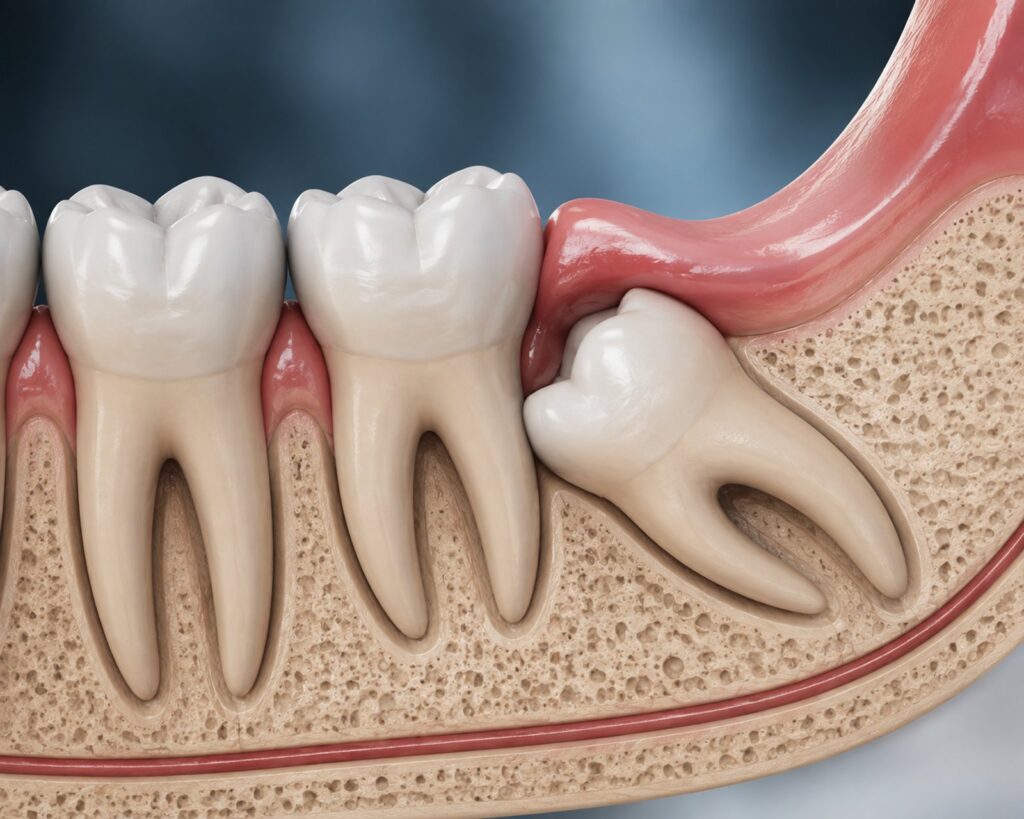
Wisdom teeth, also called third molars, are the last set of teeth to grow in your mouth. Usually, they appear between ages 17 and 25. However, sometimes these teeth do not come out properly. When a wisdom tooth cannot fully break through the gum, it is called an impacted wisdom tooth. Impacted wisdom teeth can cause pain, swelling, and infection. Early diagnosis and treatment are important. If left untreated, impacted wisdom teeth may lead to gum problems, repeated dental infections, and damage to nearby teeth. At SAI MOBIDENT DENTAL CENTER, Dr. S K Arora and his team of expert dentists helps patients manage these issues with expert care.
What Are Impacted Wisdom Teeth?
An impacted tooth is a tooth that gets trapped in the gum or jawbone. Sometimes, a tooth is only partly trapped. Other times, it is completely stuck and cannot come out at all. This often happens because there is not enough space in the jaw. As a result, the wisdom tooth cannot grow in the right direction. There are different types of impaction:
Each type can cause different problems. Therefore, it is important to get a dental check-up if you notice any symptoms.
Causes of Impacted Wisdom Teeth
There are several reasons why wisdom teeth become impacted. Often, the jaw is too small to fit these extra teeth. Sometimes, the teeth grow in the wrong direction. Other causes include:
Because of these factors, wisdom teeth may not have enough room to come out straight. As a result, they get trapped and cause discomfort.
Symptoms of Impacted Wisdom Teeth
Impacted wisdom teeth can cause many symptoms. Sometimes, the signs are mild at first. However, they can get worse over time. Common symptoms include:
Sometimes, impacted wisdom teeth do not cause any symptoms at first. But problems can develop later. Therefore, regular dental visits are important for early detection.
Complications of Untreated Impacted Wisdom Teeth
If impacted wisdom teeth are not treated, they can lead to serious problems. For example, bacteria and food can get trapped under the gum, causing a gum infection called pericoronitis. This infection can make the gums red, swollen, and painful. In addition, impacted teeth can damage nearby teeth. They may cause decay, root damage, or gum problems in the second molar. Sometimes, a dental cyst forms around the impacted tooth. This cyst can harm the surrounding bone and teeth. Jaw and bite problems may also develop due to pressure from the impacted tooth. Because of these risks, early treatment is important.
Diagnosis of Impacted Wisdom Teeth
To diagnose impacted wisdom teeth, your dentist will first ask about your symptoms. Next, they will examine your mouth, gums, and teeth. Often, a special dental X-ray called an OPG (Orthopantomogram) is used. This scan shows the position of your wisdom teeth and their relationship with nearby structures. In some cases, advanced imaging like CBCT (Cone Beam CT) may be needed for complex cases. These tests help your dental surgeon plan the best treatment for you.
Treatment Options for Impacted Wisdom Teeth
Treatment depends on the position of the tooth, your symptoms, and the risk of future problems. Sometimes, if the impacted wisdom tooth is healthy and not causing trouble, your dentist may suggest monitoring it with regular check-ups. However, if there are symptoms or a risk of complications, surgical removal is often needed. Wisdom tooth removal is a common procedure. During the surgery, local anesthesia is given to numb the area. The dentist then makes a small opening in the gum to access and remove the impacted tooth. After the procedure, you will receive instructions for care and recovery. The dental team at SAI MOBIDENT DENTAL CENTER ensures your comfort and safety throughout the process.
Benefits of Early Treatment
Early treatment of impacted wisdom teeth offers many benefits. For example, it:
Therefore, seeing a dental specialist early can save you from future discomfort and dental problems.
Recovery After Wisdom Tooth Removal
After wisdom tooth surgery, mild swelling and discomfort are common. However, these symptoms usually improve within a few days. To help recovery, follow your dentist’s instructions:
Most people recover fully within a week. If you have any concerns, contact your dental clinic for advice.
FAQs
1. What is an impacted wisdom tooth?
An impacted wisdom tooth is a third molar that cannot fully come out because it is trapped in the gum or jawbone.
2. Does every impacted wisdom tooth need removal?
No, not all impacted wisdom teeth need removal. If the tooth is healthy and symptom-free, your dentist may suggest regular monitoring.
3. What are the signs that wisdom teeth need extraction?
Signs include pain, swelling, repeated infections, damage to nearby teeth, or cyst formation. Your dentist will help decide if removal is needed.
4. Is wisdom tooth removal painful?
Wisdom tooth extraction is done under local anesthesia, so you should not feel pain during the procedure. Mild discomfort after surgery is normal and can be managed with medicines.
5. How is an impacted wisdom tooth diagnosed?
Your dentist will examine your mouth and use dental X-rays like an OPG scan to check the tooth’s position.
6. How long does recovery take after wisdom tooth surgery?
Most people recover within a week. Swelling and discomfort usually improve in a few days.
7. Can impacted wisdom teeth damage nearby teeth?
Yes, impacted wisdom teeth can press against nearby teeth, causing decay, gum problems, or root damage.
Conclusion
Impacted wisdom teeth are common, but they should not be ignored. Early diagnosis and treatment can prevent pain, infection, and other complications. A professional dental evaluation helps decide if monitoring or removal is best for you. For expert care, consult Dr. S K Arora and his highly experienced surgical teams of oral surgeons at SAI MOBIDENT DENTAL CENTER. You will receive personalized advice and treatment options for impacted wisdom teeth.
Experiencing wisdom tooth pain, swelling, or discomfort? Consult Dr. S K Arora and his highly experienced surgical teams of oral surgeons at SAI MOBIDENT DENTAL CENTER for advanced diagnosis and effective treatment of impacted wisdom teeth. Early care can help prevent future dental complications.